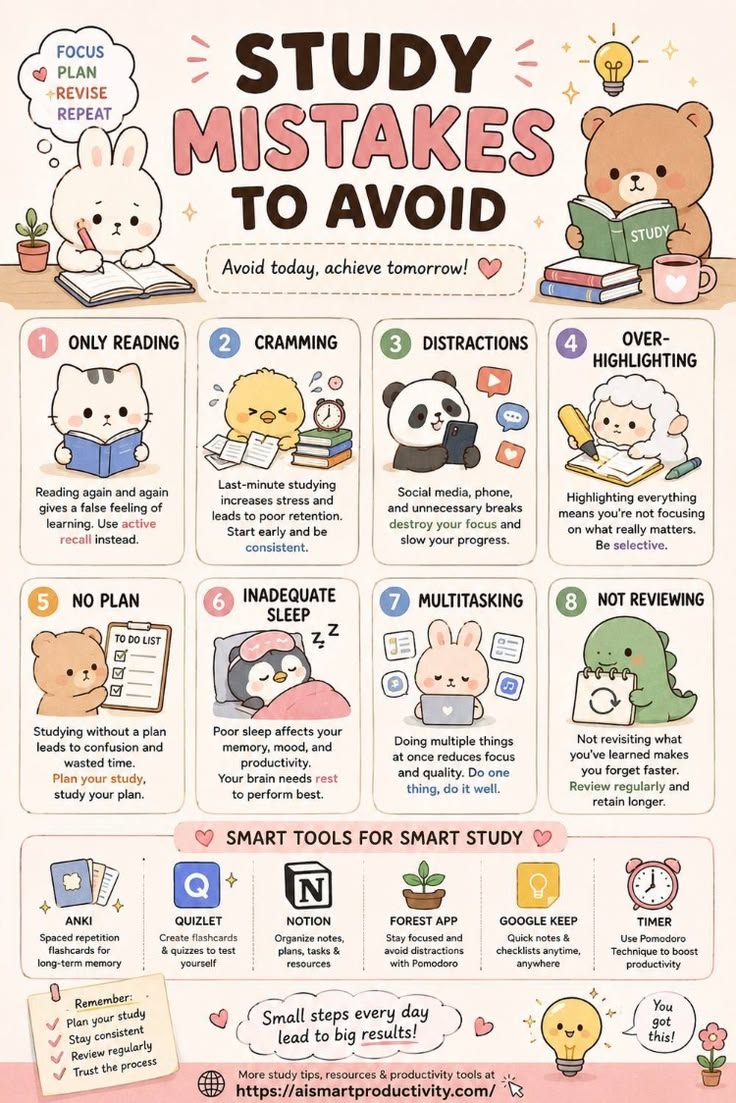
If you feel like you’re putting in the hours but not seeing the results, the problem probably isn’t effort — it’s technique. A few sneaky habits can quietly sabotage your progress without you even realizing it. Here’s a step-by-step guide to the 8 most common study mistakes, why they hold you back, and the smarter habit to replace each one with.
Step 1: Only Reading Your Notes
Reading the same material again and again feels productive, but it gives you a false sense of learning. Your brain confuses recognizing information with actually knowing it.
Fix it: Use active recall. Close your notes and try to explain the concept from memory, or quiz yourself before checking the answer.
Step 2: Cramming the Night Before
Last-minute studying increases stress and leads to poor retention. Whatever you cram in tends to fade just as fast as it went in.
Fix it: Start early and stay consistent. Spread your study sessions out over days or weeks instead of packing everything into one night.
Step 3: Letting Distractions Take Over
Social media, phone notifications, and “just a quick break” destroy your focus and slow your progress — often without you noticing how much time you’ve lost.
Fix it: Remove the temptation. Put your phone away, silence notifications, and create a dedicated study space.
Step 4: Over-Highlighting Everything
If every line in your notes is highlighted, none of it stands out. Over-highlighting means you’re not actually identifying what matters most.
Fix it: Be selective. Only mark the key terms, facts, or ideas you genuinely need to remember.
Step 5: Studying Without a Plan
Sitting down to study without a clear plan leads to confusion and wasted time. You end up bouncing between topics with no real direction.
Fix it: Plan your study, then study your plan. Decide what you’re covering and for how long before you begin.
Step 6: Skimping on Sleep
Poor sleep affects your memory, mood, and productivity. Your brain needs rest to actually lock in what you’ve learned.
Fix it: Protect your sleep schedule, especially in the days leading up to a test. Rest is part of studying, not a break from it.
Step 7: Multitasking While Studying
Doing multiple things at once — texting, watching videos, switching between subjects — reduces both your focus and the quality of your work.
Fix it: Do one thing, and do it well. Single-tasking helps you finish faster and retain more.
Step 8: Skipping Review Sessions
Not revisiting what you’ve already learned makes you forget it faster, even if you understood it well the first time.
Fix it: Review regularly and retain longer. Spaced, repeated review is what moves information into long-term memory.