Meta Description: Stressed about upcoming exams? Discover 5 science-backed last-minute revision techniques to boost memory retention, reduce anxiety, and score higher.
How to Revise for Exams When You run Out of Time
Exam season brings pressure, especially when the final test date is just around the corner. While long-term preparation is ideal, knowing how to handle last-minute revisions can make the difference between a average score and outstanding results.
Instead of panicking or pulling all-nighter cram sessions—which can hurt performance—you need a smart strategy. Here are 5 practical, last-minute study tips to help you focus on what matters, stay calm, and perform at your best.
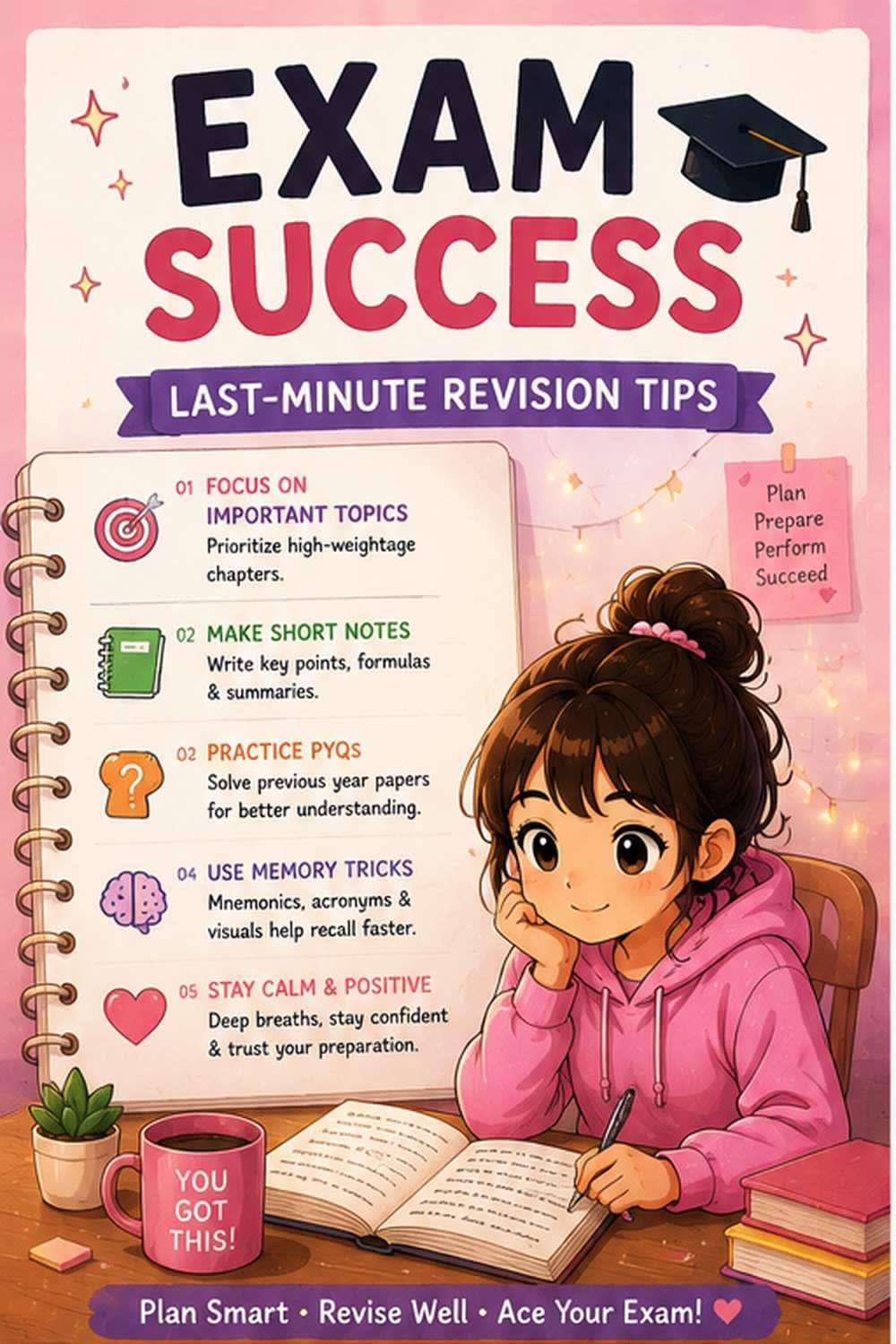
1. Focus on Important Topics (High-Weightage Chapters)
When time is limited, trying to review an entire syllabus word-for-word is impossible.
Prioritize High-Weightage Content: Analyze previous test trends or syllabus weightage breakdowns. Direct 80% of your remaining study time toward topics that carry the highest marks.
Master the Core Concepts: Focus on fundamental principles, primary definitions, and major theories instead of getting bogged down in minor details.
2. Make Short Notes (Summaries & Formulas)
Passive reading rarely helps with quick retention. Writing key points manually engages kinetic learning and makes quick review effortless.
Formula Sheets: Compile all critical mathematical formulas, scientific equations, and definitions onto a single page.
Bullet Summaries: Condense whole chapters into 3–5 high-level bullet points for a fast final look right before entering the exam hall.
3. Practice Previous Year Questions (PYQs)
Solving past exam papers is one of the most effective ways to understand how examiners structure their tests.
Understand Question Formats: PYQs reveal repeating patterns, common question structures, and trick scenarios.
Improve Time Management: Set a timer while solving practice papers to train yourself to answer questions within real time constraints.
4. Use Memory Tricks (Mnemonics & Visuals)
When you need to remember long lists, classifications, or complex sequences quickly, memory aids act as mental shortcuts.
Acronyms & Mnemonics: Create simple word associations or letters to recall order (e.g., using “PEMDAS” for mathematical operations).
Visual Associations: Draw simple flowcharts or mind maps. Visual cues activate different areas of the brain, making retrieval much faster under test conditions.
5. Stay Calm & Maintain Optimism
Mental clarity is just as critical as academic preparation. High stress levels block working memory and lead to avoidable mistakes.
Practice Deep Breathing: When anxiety kicks in, take a few slow, deep breaths to regulate your nervous system and regain focus.
Trust Your Prep: Maintain a positive mindset. Confidence allows your brain to access information smoothly without getting blocked by panic.
Plan Smart, Revise Well, Ace Your Exam
Last-minute exam preparation isn’t about working harder; it’s about studying smarter. By focusing on high-impact topics, testing yourself with PYQs, and keeping your mind calm, you can maximize your retention and step into your exam with complete confidence.
Small, focused efforts today lead to big achievements tomorrow!