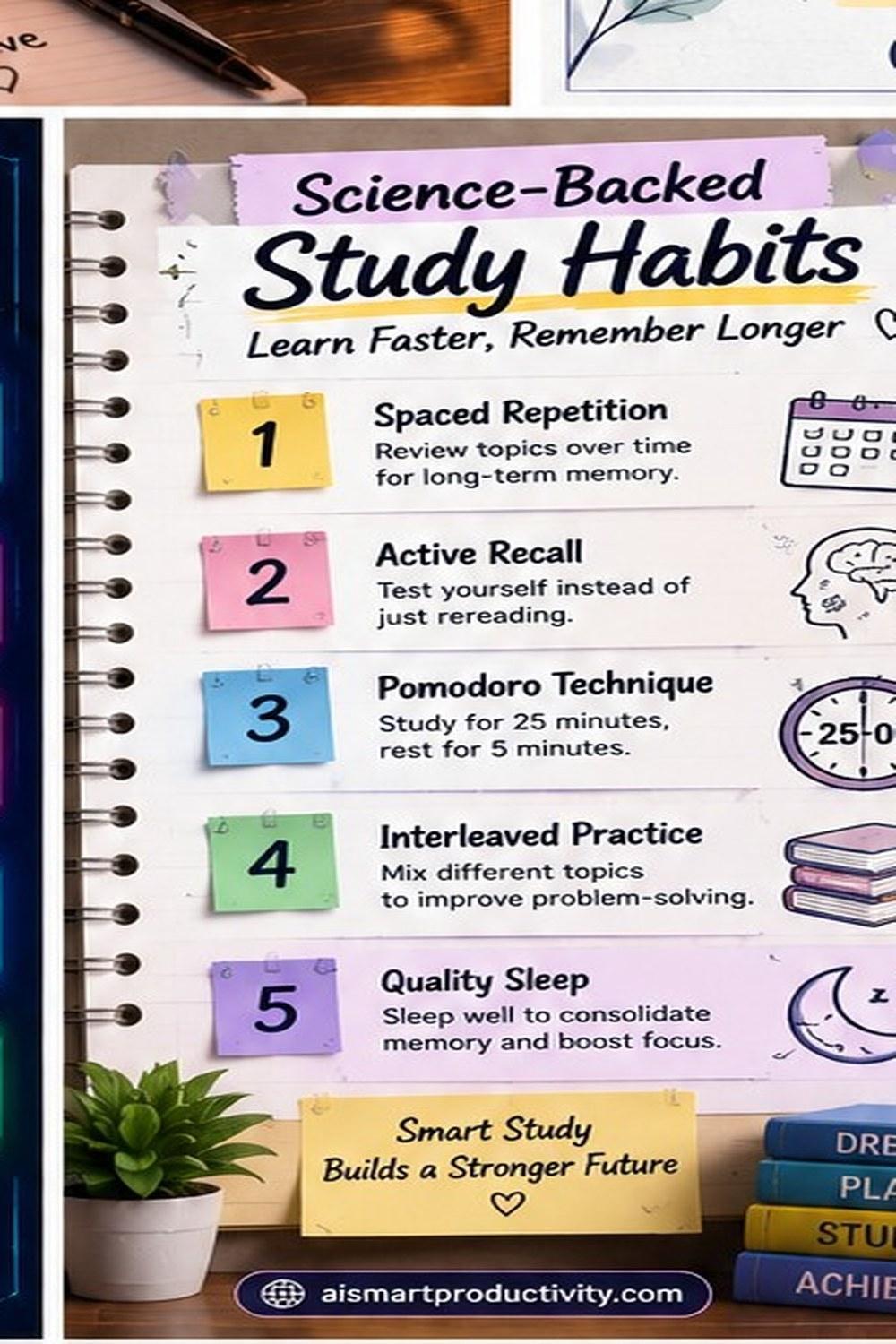
If you’ve ever spent hours studying and still felt unprepared, the problem probably isn’t effort — it’s method. Cognitive science has identified specific study techniques that measurably improve memory retention and understanding. Below is a step-by-step guide to five of the most effective ones, plus a handful of supporting habits that make them work even better.
https://aismartproductivity.com/wp-admin/post-new.php
Step 1: Use Spaced Repetition Instead of Cramming
What to do: Instead of reviewing a topic once and moving on, revisit it at increasing intervals — for example, the next day, then a few days later, then a week later, and so on.
Why it works: Cramming loads information into short-term memory, where it fades quickly. Reviewing material right before you’re about to forget it signals to your brain that the information matters, which helps transfer it from short-term to long-term storage.
How to apply it: Build a simple review schedule when you first learn something new. Even revisiting your notes for 10 minutes a few days after first learning them makes a measurable difference.
Step 2: Test Yourself With Active Recall
What to do: Instead of rereading notes or highlighting text, close your materials and try to recall the information from memory. Then check what you got right or missed.
Why it works: This is called retrieval practice, and it does two things rereading can’t: it strengthens the memory itself, and it shows you exactly what you don’t know yet — so you’re not wasting time re-studying material you’ve already mastered.
How to apply it: Turn your notes into questions, use flashcards, or take a practice quiz before checking your source material. Explaining a concept out loud from memory works just as well.
Step 3: Study in Focused Bursts With the Pomodoro Technique
What to do: Study in focused 25-minute sessions, followed by a 5-minute break. Repeat this cycle for as long as you need to study.
Why it works: This structure works with your brain’s natural attention span rather than against it. Long, unbroken study sessions lead to mental fatigue and diminishing returns; short, focused sprints keep concentration sharp.
How to apply it: Set a timer for 25 minutes and commit to studying only one task during that block — no phone, no multitasking. When the timer ends, take a real 5-minute break away from your study material before starting the next cycle.
Step 4: Take Notes Elaboratively, Not Passively
What to do: Write notes in your own words rather than copying text directly. Add your own examples, simple diagrams, and connections between ideas as you go.
Why it works: Rewriting information in your own words forces you to process it, rather than just transcribe it. This creates multiple connections in the brain around the same piece of information, which makes it easier to recall later — even if you approach the question from a different angle than how you originally learned it.
How to apply it: After reading a section, close the material and summarize it in your own words. Add a quick example or sketch to reinforce how the idea connects to something else you know.
Step 5: Prioritize Sleep and Regular Breaks
What to do: Get enough sleep and build regular breaks into your study routine, rather than pushing through fatigue.
Why it works: Memory consolidation largely happens during sleep, not during active study. Skipping sleep to fit in more study time often backfires — it reduces the very process that locks information into long-term memory, and it increases burnout risk, which hurts overall productivity.
How to apply it: Treat sleep as part of your study plan, not something separate from it. Pair this with your Pomodoro breaks throughout the day so your brain gets consistent recovery time, not just at night.
Bonus: Supporting Habits That Make Everything Else Work Better
These won’t replace the five steps above, but they measurably support them:
Stay hydrated — even mild dehydration reduces focus and cognitive performance.
Eat brain-friendly foods — nutrition affects concentration and energy levels during study sessions.
Exercise regularly — physical activity is linked to improved mood, focus, and memory.
Avoid multitasking — switching between tasks reduces the depth of processing for each one.
Keep a positive mindset — stress and anxiety interfere with memory formation and recall.
The Bottom Line
Your brain learns best when you plan, focus, practice actively, and take care of yourself. None of these five steps require studying for more hours — they require using the hours you already spend studying more effectively. Start with one or two, like active recall and the Pomodoro Technique, since they’re the easiest to implement immediately, and build from there.
Consistency beats intensity. Small habits, applied regularly, produce big results over time.